Carbon Peel
Explore Carbon PeelCompare a chemical-solution peel with the carbon-assisted laser category.

A clearer-looking, more even complexion starts with the right peel, not simply the strongest one. Skin51 offers superficial and medium-depth chemical peels plus an Advanced / Medical category, with guidance around the tone, texture or visible marks you want to address.
Chemical peels use an applied preparation to renew the skin's surface. The depth and formulation shape what a peel aims to improve and how skin may respond afterward. Skin51's published range gives you more than one direction to explore, with a conversation focused on the concern that matters to you.
The published choices offer a starting point for a more precise plan, not a ladder where stronger is always better.
Explore surface renewal when dullness, roughness or uneven-looking tone is your priority.
Discuss a deeper category when visible marks or texture call for a different level of treatment and recovery planning.
This is another published Skin51 category. Ask how the proposed option differs in purpose and care; the label alone does not define a deep-peel procedure.
A useful peel plan starts with your skin and your calendar as well as the name of the treatment.
Point to the tone, visible marks or texture that makes a peel worth considering for you.
Share sensitivity, pigment concerns and current products or treatments so the team can discuss an appropriate direction.
Bring up an upcoming event or time outdoors so recovery and care can be considered before a choice is made.
A chemical preparation is applied to the skin to create a controlled exfoliating response. Different formulations and depths make this a range of treatments rather than one standard facial. The intended change and the skin's response need to be considered together.
A Carbon Peel is a different method: it pairs topical carbon with laser treatment. Skin51 offers both Services, so you can compare chemical exfoliation with a carbon-assisted laser facial around your own concern.
Three useful stages help turn the published range into a treatment conversation.
Tell the team whether dullness, uneven tone, visible marks or texture is the main change you want to explore.
Discuss which peel category and proposed formulation fit that goal, and what kind of skin response may follow.
Understand preparation, recovery and sun care for the actual option before deciding how it fits your routine.

A smoother or more even-looking complexion is a meaningful goal, but the visible change depends on the peel chosen and your skin. Some peels involve redness or flaking; a more involved peel can need more recovery. Visible peeling is not the measure of a good result.
Tell the team about your calendar, skin history and current routine. They can explain the care relevant to the proposed peel, including sun exposure and when to judge your skin's response, before you make a plan.
The value is in having a real range and a reasoned choice within it.
Skin51's superficial, medium-depth and Advanced / Medical categories give the conversation a meaningful choice, rather than one default treatment.
Tone, visible marks and texture lead to different priorities. The team can connect the available direction to the change you actually want.
A useful plan includes what the proposed peel may involve afterward, so recovery and your routine are considered with the aesthetic goal.
A little clarity about your goal makes the first conversation more useful.
No. Depth and formulation change the purpose, skin response and care around a peel. Skin51's published range includes superficial and medium-depth options plus an Advanced / Medical category; the exact proposal should be explained for your goal.
A chemical peel uses an applied preparation for exfoliation. Carbon Peel pairs topical carbon with laser treatment. Skin51 offers both, and the useful comparison starts with the skin change you want.
Not necessarily. Redness, flaking and recovery vary with the peel and your skin. Ask what response and care are relevant to the option being proposed rather than treating visible peeling as the goal.
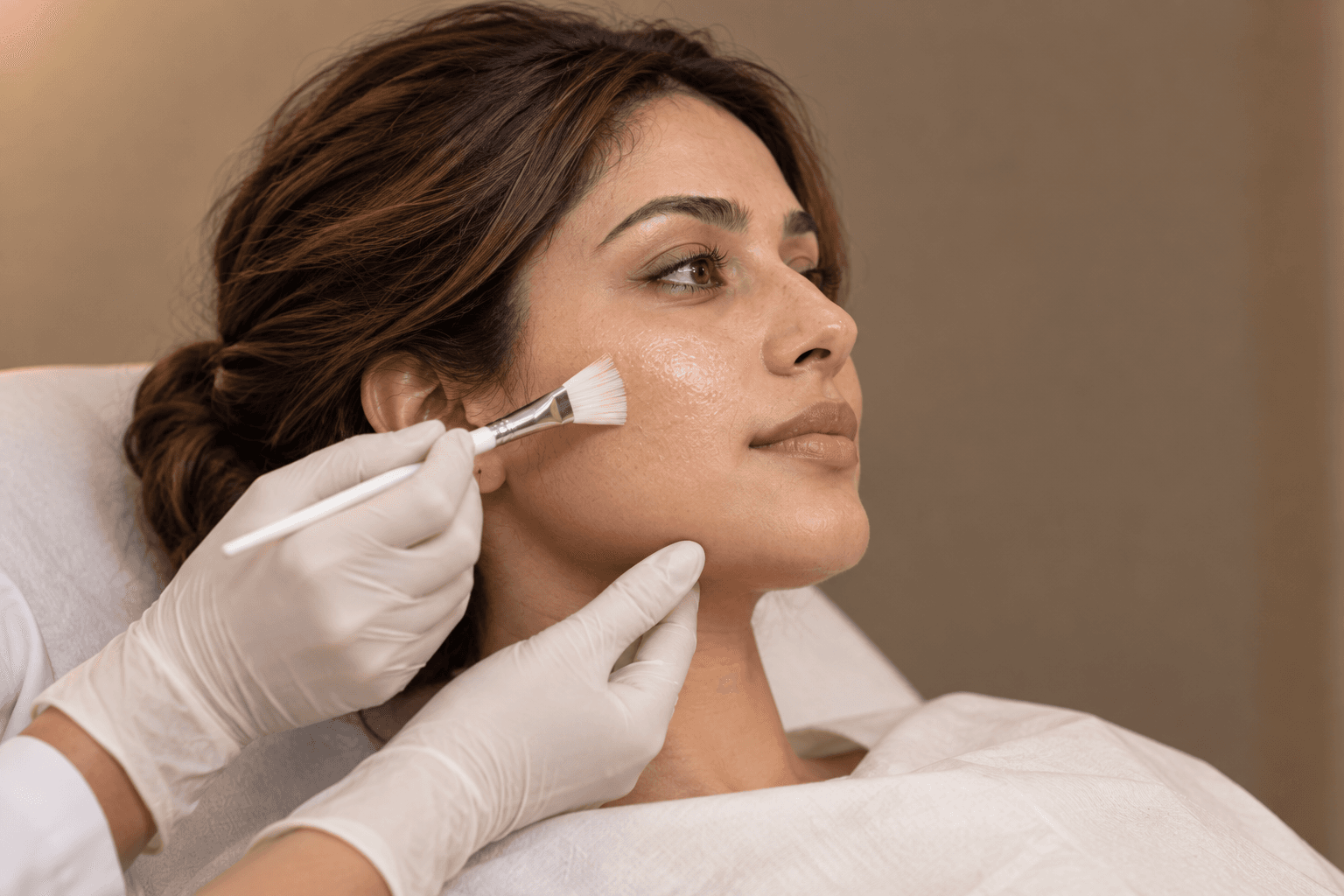
The treatment and care images are illustrative editorial scenes, not photographs of Skin51 sessions.
Compare a chemical-solution peel with the carbon-assisted laser category.
A flat post-acne mark usually concerns colour. Lasting indentations or raised scars concern texture. They can occur together; improving one does not automatically resolve the other.
Different methods. Choose for your priority.
Start with your first celebration and main goal. Give laser hair removal months of planning space, allow for peel preparation and healing, and plan a facial around a response you know.
Chemical peels can improve uneven-looking tone when the approach fits the kind of pigmentation. They are worth exploring for suitable surface dark marks and sun-associated colour changes; for melasma, a peel can be one part of a wider plan. Start with the concern, then choose the depth and care around it.
Carbon Peel pairs a carbon preparation with laser treatment; a chemical peel uses a solution for exfoliation. Explore the carbon-and-laser facial for an oil or congestion focus, and chemical peels when more even-looking tone or smoother surface texture is your priority.
Call or message Skin51 through the contact page about the tone, marks or texture you want to address. We can help you compare the peel directions and plan a useful next conversation.